
Pecha Kucha – the chit-chat, low-down on Cincinnati’s hottest designers
Pecha Kucha (PK), Japanese for chit-chat, is a global conversation taking place at the cutting edge of culture, which began six years ago in Tokyo. Now taking place in cities around the world, PK events bring together designers, academics and a host of other professionals, who network and share their ideas in a revolutionary format with a unique twist: all presentations must consist of 20 images, each of which must be described within 20 seconds. Ready to display its own creative powers, Cincinnati is in on the conversation now too.
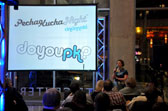
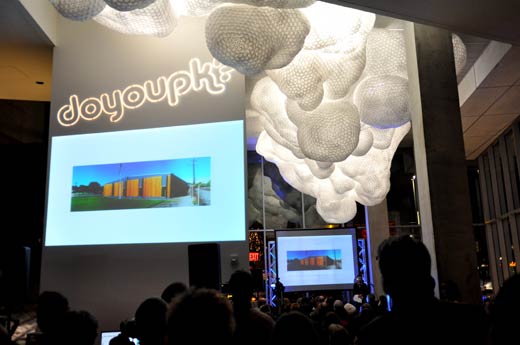 Thanks to a concise, lively form of presentation called Pecha Kucha (Japanese for “chit-chat”), gone are the days of sleepy lecture halls presided over by experts endlessly droning on about their pet projects.
Pecha Kucha (PK) started in 2003 when Tokyo-based architects Mark Dytham and Astrid Klein (Klein Dytham Architecture) cooked up a radically simple, yet ingenious, remedy to salvage a failing performance space.
Cutting fat from and adding spice to the traditional lecture format, the remedy went like this: 20 images in PowerPoint, 20 seconds to describe each. That’s it. Six minutes and forty seconds to share compelling ideas to a rapt audience with neither the crutch of reading notes nor option to ramble.
The 20/20 rule.
 Working within these limits, those interested gather to listen as designers and other creatives speak about topics of their choosing. The result is a casual forum where young designers of all stripes can share their vision and network in a yawn-free setting.
After proving itself a local hit, PK soon spread. What began in Tokyo has virally made its way to more than 170 cities, from Beijing and Barcelona to Amsterdam and Austin.
Now Cincinnati is chatting too.
On February 13, 2009, nearly 300 members of Cincinnati’s creative class convened on the Contemporary Arts Center downtown for Pecha Kucha Night Cincinnati Volume 01, sponsored by Pleat Design, Openfield Creative and Prestige AV and Creative Services.
“PK Vol. 1 was such a huge success,” says official organizer, Greg Lewis. “It demonstrated that the same desire that got PK started in Tokyo six years ago is present here in Cincinnati today.”
But a success like this doesn’t just happen. It takes a great deal of passion, effort and heaps of cooperation.
“As with any major event, there are always going to be challenges in the production process,” says Lewis, a project designer for KZF Design, independent furniture designer and adjunct professor at his alma-mater, the University of Cincinnati College of Design, Architecture, Art and Planning.
“Fortunately,” he continues, “each team member took on different responsibilities for the event, such as coordinating with presenters and vendors, bringing in sponsorships, branding, media development and marketing.”
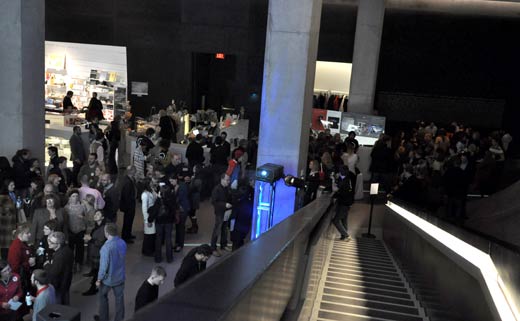 At this inaugural event, attendees savored eye candy and listened to presentations on various topics, from design staples like art and architecture, to quirkier ones like tattoos and graffiti. Essentially, there is no restriction on what can be covered.
“As designers we often seek inspiration from other designers, especially ones that practice outside of our discipline,” Lewis says. “This is where we all benefit, both presenters and audience: from the diversity that PK promotes.”
Although PK started as a venue primarily geared for visual art and design, the format has expanded its scope to allow for presenters from the worlds of business and academia to join the dialogue. And with the 20/20 rule in effect, each event features around a dozen presenters from this open playing field.
“The greatness of Pecha Kucha Night Vol. 1 at the CAC came from the variety of ideas presented,” Lewis says. “The outstanding presentations were the ones that engaged the crowd.”
For example, Lewis notes, in A Collection of 20 Questions, by designer and animator Jason Snell, “the sometimes hazy audio was played through a hand held cassette player and synced with highly stylized portraits of the people being recorded. The resultant unpredictability of what was said was highly entertaining.”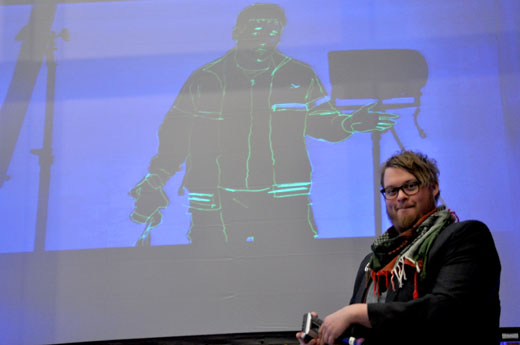
Another stand-out presentation was Dead Meat, by Lauren Davis, a student at the University of Cincinnati. Lewis says Davis gave “raw commentary on outdated trends still alive in parts of today’s culture” which was “pointed enough to thrill the crowd.”
But the event didn’t start and end with mind-expanding forays into unexpected themes.
PK is a hybrid event tailored to the tastes of the young creative class for whom the line between work and play is increasingly blurred.
The event is clearly about much more than listening to a few creatives chit-chat. Rather, PK is another high-energy, multi-faceted happening that showcases the talent we have right here in town.
And this is only the beginning. As word spreads about this year’s experience, Lewis sees future Cincinnati PK events growing to include more of the city’s finest business, medical research and branding experts.
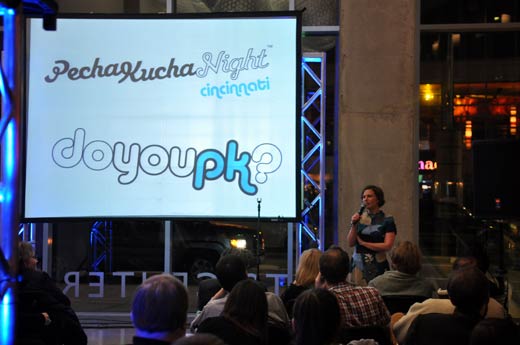 Alongside tapping into Cincinnati’s strengths, the PK committee also desires to reach the public. Toward this end, there will be three more PK events held in Cincinnati throughout 2009, the next of which will take place at the Art Academy of Cincinnati.
“Our ultimate vision for PK in the future is to hold an entirely free and public event at Fountain Square in the heart of downtown Cincinnati,” Lewis says.
It comes down to funding.
“One of the lesser discussed aspects to Pecha Kucha Night is that it is run as a not-for-profit organization,” Lewis says. “Any revenue generated from the events is put directly back into the events. We are always seeking visionary people, companies, or other organizations to sponsor PK in Cincinnati.”
When the money is there, PK holds the promise of creating a great deal of solidarity and interaction between the creative, business and public spheres, as well as helping to strengthen regional identities.
Lewis sees Cincinnati’s proximity to other PK cities such as Columbus and Indianapolis as an opportunity.
“This could be the beginning of regional PK events where we utilize the combined strengths of each city to raise awareness of the creativity within the region,” he says. “We have even discussed within our team meetings the possibility of creating a national or even international Pecha Kucha Night, where all participating PK cities around the country or around the world host an event simultaneously.”
Imagine that: Cincinnati chatting in unison with other cities around the world.
Photography by Scott Beseler
Boyd Leigh Johnson, Build with Bullets or die
Lauren Davis, Dead Meat
Filled CAC lobby
Jason Snell, A collection of 20 questions
Raphaela Platow
Related Articles
Fewer options, fuller ERs: The behavioral health fallout of Medicaid cuts
MHA advocates for state funding that preserves behavioral health care and keeps rural hospitals open.
What does the new childhood vaccine schedule actually mean for your family?
Officials say not much will change. Experts aren’t so sure.

New platform to share ‘Common Ground’ from community ideas and solutions
Issue Media Group, a multilocal network of solutions-based, issues-focused digital publications, has launched a new national platform for increasing the reach and impact of its journalism.