Blog

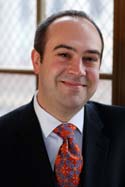
Guest Blogger: Eric Avner

For the last seven years Eric Avner has served as the Associate Director of the Cincinnati Business Committee. Prior to that, he directed the downtown revitalization efforts for Newport, Kentucky.  Professionaly active around town, he says he’s more proud of community efforts he’s spearheaded “out of the office” such as the creation of the Purple People Bridge, co-chairing the Know Theatre’s Capital Campaign, and – yes – initiating a new media outfit called Soapbox.

Assuming the role of “Citizen Avner,” he will use this space to share his thoughts on Cincinnati's prospects.


Eric Avner Post #3 - The right mix?
Posted By: Eric Avner, 2/16/2008
It seems every civic institution, initiative, or booster lists our “excellent arts & culture” as one of this region’s drawing cards. As they should. Each year, my Fine Arts Fund campaign brochure reminds me that we are blessed with a legacy of quality fine arts institutions that need our continued support.


We try to support the majors. My wife and I go to Paavo’s symphony every so often. We catch an opera or two each summer. We were wowed by “Othello” at our Tony Award-winning Playhouse in the Park. On the other hand, we mostly use our membership at the Art Museum to get a discount at the Terrace Café, and in spite of having memberships at the Freedom Center and the Taft Museum of Art, we’ve never taken the time to make it through all their exhibits.


For all the attention and resources that are devoted to maintaining our amazing anchor arts institutions, I believe that we also have an imperative to put a similar amount of energy behind efforts to support the smaller and mid-sized, edgier arts offerings that tend to be more attractive to that talent we as a region need to retain and attract.


While I don’t disagree with the value and distinction of having a rich historical tradition of traditional fine arts, I do wonder whether or not we are leveraging the right mix of arts and culture to compete in today’s inevitable national and international competition for knowledge worker talent. We had a taste of success when the CAC’s new building opened to international rave reviews in 2003. Since then, most would agree that momentum has waned.


Through involvement in a few of our region’s innovative smaller arts organizations, I’ve seen their tremendous impact firsthand. In the late 1990s, I helped Laura Hollis Hammonds launch “The Artery,” a neighborhood arts center in Newport. It didn’t last more than a few years, but it’s been encouraging to see creative people taking the initiative to create similar centers around the region (MarX Gallery in Covington or Manifest in Walnut Hills, for example). Similarly encouraging has been the emergence of a cadre of smaller edgy theatre companies. Every time we go to the Know Theatre’s new permanent home in Over-the-Rhine, I’m amazed at their diversity of audiences, of actors, and of programming. Evidently, I’m not alone in finding their product compelling, as shows repeatedly sell out. They are continuing to grow, as they also produce the annual Cincinnati Fringe Festival and offer their facility as a venue for other progressive arts events.


I’ve also gotten more involved with Enjoy-the-Arts, a membership organization whose official mission is to “build young audiences for the arts,” but as their board president prefers to state it more bluntly, “putting tight young asses in saggy old seats.” They do this by reaching out to thousands of students, YPs, and others, tempting them with a year’s worth of free or discounted tickets to arts and culture offerings from more than 35 organizations. Nowhere else in the country has an organization like it.


To be a region that retains and attracts talent, we need to build on our existing strengths in an authentic and compelling way. Why shouldn’t Cincinnati be known across the country for its robust and thriving arts community that values and supports both the large and the small, the traditional and the challenging, the venerable and the emerging? It’s going to take more than rhetoric.  It’s up to us to make it happen.


(Postscript: This is similarly true for supporting and growing the original music scene in Cincinnati. Think about MidPoint Music Festival or Rivertown Breakdown as examples. However, I’ll save that for another blog at another time.)
 
Eric Avner Post #1 - Why a Soapbox?
Posted By: Eric Avner, 2/12/2008
Why a Soapbox?


Over the last 16 months, I’ve been discussing, meeting, planning and plotting with a varied group of people to create this new media source called Soapbox. Why would we spend so much time on something like this? Simply put, because our region needs it.


We need to move beyond a damaging “Rust Belt” narrative that obsesses over topics like disinvestment, crime, and bad schools. We need a sustained, authentic, and compelling way to communicate our region’s remarkable transformation so that we can retain and attract talent. We need to create positive momentum.


The need for Soapbox became crystal clear last fall during the Regional Chamber’s benchmarking trip to Charlotte, North Carolina. Ann Caulkins, the publisher of the Charlotte Observer, explained that all the newspapers she’s worked for have relied on a “Master Narrative;” that is, a lens through which the newspaper reports the region’s news. That lens for the Charlotte Observer was “Land of Opportunity”. When she asked our group what Cincinnati’s Master Narrative was, there was a troubling silence. We spent the rest of trip unsuccessfully trying to answer that question, at least in a positive way. The features and stories written for Soapbox will reinforce our region’s talent, innovation, diversity, and environment (physical, cultural, and natural). In time, I am hopeful that our regional Master Narrative will emerge.


Something else became clear in Charlotte: the necessity of creating buzz about a region. For whatever reason, Charlotte is red hot. Everyone’s talking about Charlotte. Charlotte’s buzz has enabled them to sustain rapid growth, largely from a massive influx of young talent. Charlotte’s buzz has allowed them to overcome a location not in the mountains or near the ocean. Somehow it doesn’t matter that their cultural assets pale in comparison to what Cincinnati can offer. Their downtown’s architecture was largely sterile, lacking any historic landmarks or local distinction. Nevertheless, everyone conveyed a can-do attitude with their eyes firmly focused on the future.


Soapbox intends to shift our collective focus towards our incredibly promising future. The writing you’ll find here will push us to dream bigger, and refuse to accept the status quo as “good enough.” By creating original content every week that is designed to spread over local and national social networks, and to be used widely in regional stakeholder communications, we feel we can help rebuild Cincinnati’s buzz. We can regain our swagger. Sixteen months was a lot of time to get this started, but we all felt it was worth it for an opportunity to share the Cincinnati story.
 
Eric Avner Blog #2 - Not done yet
Posted By: Eric Avner, 2/14/2006
There was a time a few years ago when I was ready to leave Cincinnati. I’m sure many others have faced the same dilemma. It seemed that I was consistently voting for the losing candidate, my favorite ballot issues were getting defeated, and I generally felt that the tide of civic life in town was moving in a direction that was contrary to my values. Enough was enough. I quietly drew a line in the sand, and set my sights on an upcoming election.  My wife and I agreed that if two of the three ballot issues we were supporting failed, we’d relocate. Not sure where.  Just not here.  All three of our issues passed, and we’re still here. Thankfully.


The process forced me to think about the advantages and disadvantages of living in Cincinnati versus other cities.   I went through the expected checklist of natural, cultural, and economic assets.  I thought about politics, cost of living, and accessibility to friends and family.  However, the most compelling attribute of Cincinnati started out on my “disadvantage” list:  The city isn’t done. 


I find it incredibly appealing that Cincinnati isn’t yet “completed,” and that we all still have opportunities to make a difference.  All the decisions haven’t been made.  All the buildings haven’t been rehabbed.  All the neighborhoods aren’t perfect.   Here in Cincinnati, there’s still the chance to do something big. 


The opening of the Purple People Bridge in 2003 was a proud moment, as I had been leading that effort for more than five years.  Of course, it wouldn’t have been possible without working in partnership with Southbank Partners, state and local governments, and a band of dedicated volunteers.   But reclaiming a rusting eyesore, converting it to a pedestrian bridge, and painting it purple was a once-in-a-lifetime opportunity; an opportunity that couldn’t have happened anywhere else.


I can’t imagine having the opportunity to fundamentally change the way the people use the waterfront in a city like Boston or Seattle.  I can’t imagine trying to break through the bureaucratic barriers to invite the Mayor of Chicago or San Francisco to a small neighborhood business ribbon-cutting.   I can’t imagine the frustration of living in a city (however hip) where I didn’t think my voice could be heard.


According to CEOs for Cities research, two-thirds of today’s college graduates are picking the cities where they will live before they find a job.   That locational decision is largely based on perceptions of a region’s quality of life, but it’s not all about lattes and lofts.   It’s also about the perception of having a real opportunity to make a meaningful difference.  This may be one of our region’s key competitive advantages in retaining and attracting talent.  We can distinguish ourselves by letting it be known that the City’s not yet done.  We are still completing it, and we need everyone’s help.