
Blog

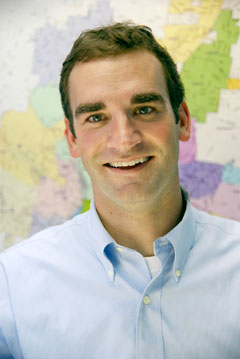
Guest Blogger: Chris Bortz

City Councilman Chris Bortz is a lifelong Cincinnati citizen elected in November 2005. As chairman of City Council’s economic development committee, Bortz announced the formation of Go Cincinnati, a public-private economic development initiative charged with devising an economic growth strategy that uses the best of existing plans and programs as well as new ideas. The committee will develop an economic growth strategy to effectively allocate the city’s limited resources, set priorities, and set the stage for an increase in government revenues by expanding its tax base. It will concentrate on three areas: job attraction and retention, workforce development, and neighborhood development.

In addition to working on economic growth and crime, the Councilmember is a major advocate for a Streetcar system that would link the urban core, spur business and residential development, provide parking relief and reduce congestion and air pollution.

Environmental issues are also an important topic to Councilmember Bortz. Along with Councilmember Laketa Cole, he initiated two pieces of legislation that provide tax and other financial incentives to develop buildings to Leadership in Energy & Environmental Design (LEED) standards. New municipal buildings and renovations to existing municipal buildings will also incorporate green building elements. Additionally, a fund will be created to provide loans to developers of low and moderate income housing to build LEED certified. He is currently working on Green Streets Legislation modeled after Portland's Green Streets project, which reduces storm sewer runoff by using landscaped storm water planters to infiltrate street runoff.

Fighting blight and nuisance is also a topic of concentration. Councilmember Bortz is working to analyze city owned property and its possible potential in an attempt to reduce blight. He is currently working towards empowering the Department of Buildings and Inspections to aggressively pursue the elimination of blight through increased funding for demolition, blight/hazard abatement and adding additional inspectors.


SoapBlog 1 - Connecting the Dots
Posted By: Chris Bortz, 9/2/2008
Probably no surprise to anyone who pays attention to City Hall, but I think we should build a streetcar system in Cincinnati.  I began by approaching the concept with a high degree of skepticism but now have crossed over to full-throated advocate.  Not because I’m under some kind of hypnosis, but because the vision, the facts, and the numbers all add up.

So much is happening in Cincinnati - but it’s precarious, this new renaissance.  It is still fragile in its infancy. 

I’ve heard many reasonable, as well as some not so reasonable, criticisms of the plan.  Included among the reasonable are:
Where did this come from? 
Why is this “suddenly” a city priority? 
Can we afford it? 
Will anyone ride it?

To answer some of these questions, let me begin with “where did this come from?” First, the proposal isn’t new.  Discussions for building a streetcar have been around in one form or another all the way back to when the original street cars were first dismantled in the ‘50s – a deliberate move orchestrated throughout the country by the (once) Big Three auto makers so as to encourage investment in roads (see GM Charlie Wilson’s post WWII memos). 

Talk of connecting Uptown and Downtown with passenger rail has been on the table for decades.  The Metro Moves plan introduced almost eight years ago included a streetcar component, but the billion-dollar price tag for the commuter light rail and a well-intentioned, but woefully inadequate campaign turned uninformed voters off back when oil was about $23 a barrel. 

As to why this is now a city priority, our priorities have moved forward because we have actually accomplished much of what had been on our community agenda for years.  The stadiums are built, The Banks is underway, investment in OTR is ongoing under 3CDC’s leadership, Fountain Square has been remade and Findlay Market has never looked better. 

One thing hasn’t changed. Community leadership (city, county, business, institutional) still agree that the key to Cincinnati’s regional prosperity is a healthy and vibrant urban center.  Our two major job generators, Uptown and Downtown, are the lifeblood of our economy. 

What about the numbers including costs to construct, operating expenses, ridership projections, and the expected return to the community?  Well, those numbers were not pulled out of a hat.  Transportation experts and economists reached them after extensive research and analysis and review of the success of other forward thinking cities.  Then they were independently verified.  Don’t agree?  O.K., then challenge assumptions and conclusions specifically.  But don’t just tell me it doesn’t feel right.  Our community is embracing data driven decision-making.  We have the data.  Now is the time to make a decision. 

Is there a funding gap?  You bet.  No other city in the country has been able to build a streetcar system without a dedicated tax.  “You can’t do that here.  Taxes are too high,” they say.  O.K. Then let’s put our heads together and figure out how to fill the gap. 

Are there other priorities in Cincinnati?  Of course.  Our schools need to be better.  Health and poverty issues need constant attention and significant investment.  Crime must be fought aggressively.  But we are working on all of those things, and we are beginning to see results.  No one is suggesting that our streetcar plan should or would reduce funding for those ongoing priorities.  We are a big enough city that we can walk and chew gum at the same time.  Building and maintaining infrastructure is what governments do; no one else will.

Why build it?  You’ve heard the arguments.  We need more money to keep the pressure on crime, close the health gap, improve workforce development, and combat blight. We need more residents and more jobs. A streetcar, according to the experts, will help create those jobs and attract those residents and generate those new dollars as well as position our city in a competitive, global economy, create walkable neighborhoods, attract young professionals, stimulate residential development, energize retail, reduce parking pressures and  alleviate traffic congestion. But my favorite reason to do this?  To tie together all the investments we have already made or are making.  We can physically connect them.   

Time to connect the dots.