Young people: Not just our future, our present as well
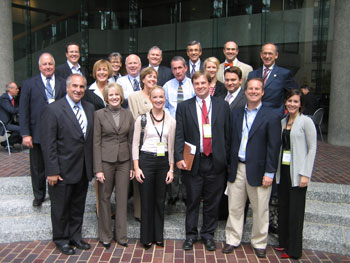
I've just returned from Washington D.C. as part of the Cincinnati contingent for CEOs for Cities, a network of urban change agents. We were joined by over 40 other cities from the US and Canada in hearing speakers from the White House, urban institutes, and thought leaders from around the country talk about programs and best practices being applied in cities around the world. I came away from D.C. really encouraged - there are a lot of brilliant people working hard right now to ensure our economic future in the U.S.
One of the most astounding statistics we heard relates to education - and its impact on urban economic prosperity. When it comes to urban policy, we often think of affordable housing and the revitalization of disadvantaged neighborhoods. Now there’s another factor that’s crucial to a city’s success: attracting and retaining college graduates. The good news? As a country, we're on it. Obama has set a goal for 2020 to be #1 in the world in post secondary education (in the past, we have been, but in recent years, we’ve dropped in the ranks).
CEO for Cities has found that the amount of talent, or percentage of graduates in a city's population, can explain 58% of a city's success measured by per capita income. According to Carol Coletta, president of CEOs for Cities, "those cities that can attract the greatest number of people with the most talent will be the ones that win." CEOs for Cities did a study on the Talent Dividend and found that by increasing the college graduation rate by 1% would result in a $763 increase in annual regional per capita income. That means that in each of the 51 largest metropolitan areas (Cincinnati is #50), increasing the four-year college attainment rate by one percentage point from its current median of 29.4 percent to 30.4 percent would be associated with an increase in aggregate personal income of $124 billion per year for the nation.
And that’s just the beginning. If you factor in not just the return on investment from increased productivity and associated wages from employment, but also factor in the companies that could be created by recent college grads, the return is much faster and much greater. Case in point: 5 out of 8 of the winners of the Cincinnati Innovates competition were undergraduate students or within one year of graduation. What that tells me is that our young people are not just our future; they are our present.
In economic times like this, we need to look beyond the established companies that fuel our local economy. We need to think seriously about the talent, opportunity, and latent intellectual property that exists in our universities -students, professors, and researchers. According to the Kauffman Foundation, 100% of net job growth from 1981-2001 can be attributed to companies that are less than 5 years old. Today, cities like Pittsburgh are capitalizing on startups to fuel their economic growth.
A decade ago, venture capital investing in Pittsburgh was a blip on the national radar, number 31 to be exact, down from cities like San Francisco, Boston, and New York. Data compiled by the National Venture Capital Association, Thomson Financial, and PWC Money Tree for 2006 shows the Pittsburgh region at number 16, one of the largest relative increases in venture capital (VC) investment among all regions in the United States. Pennsylvania also now ranks third in the country for total VC jobs.
This increase in venture capital and startup companies over the last 10 years has created one of the most startling economic rebounds in the history of the U.S. Pennsylvania venture-backed companies added the most U.S. jobs between 2003-2005 than any other state - 167,000 jobs, beating Texas and California. Startups create jobs.
As a venture capital investor at Neyer Holdings, I work a lot with the University of Cincinnati and other university tech transfer offices to commercialize technologies being developed at our universities. And because of that involvement, I’ve been able to meet some amazing researchers at UC like Jason Heikenfeld, a professor in the Novel Device labs who creates electrofluidic display technologies with industry leaders like Polymer Vision - and has a tough time finding funds at UC to cover patents.
Time to pay attention! Follow the dollars. UC has over $350 million in research going on right now and less than $1 million a year in royalty revenues from technologies it has developed. You might wonder why. Well, at a time when budgets are tight, things like patent funds and offices like the tech transfer office don’t get as much attention as maybe they should. It’s absolutely critical that we properly fund - through foundation grants, private donations, and state funds - these activities. Otherwise, we’ll never reap the rewards of the hard work we do in this region.
If we don’t, do something fast, we’re going to slip down in the ranks of innovative cities into what innovation experts at McKinsey call "Shrinking Pools", markets that are economically stagnant and failing due to lack of innovation. Check out how Cincinnati stacks up in terms of innovation in this interactive world
map.
Statewide, we're on the right track. Eric Fingerhut, Chancellor of the Ohio Board of Regents, who oversees the entire university system for the State of Ohio spoke in D.C. at CEOs for Cities about our state's objective to make our universities centers of economic prosperity and talent retention. His commitment to that goal has led to commitment from all the Ohio University presidents: economic prosperity, talent retention, and startups are on the radar in Columbus.
How can you help? The Ohio Third Frontier program is the state funded program that makes organizations like CincyTech, a $10.5 million public-private venture fund here in Cincinnati, possible. CincyTech has already invested $3.4 million in 11 companies that have created 175 jobs at an average annual wage of $66,000 and are on track to create 1,000 jobs over the next eight years. In November, the Third Frontier program will be on the ballot in Ohio. Basically, our economic future will be up for 'renewal'. I hope you will vote to renew that future.
Elizabeth Edwards is a capital investor with Neyer Holdings, and founded Cincinnati Innovates.
Cincinnati is becoming a model city, a 'best practice' for other cities embarking on transformation.
I recently attended an Urban Leaders Summit sponsored by the CEO for Cities conference in Washington, DC as part of a Cincinnati delegation. It was 48 hours of great speakers, sharing of ideas and connecting with high powered leaders from all over the country to "take a fresh look at the unprecedented possibilities for inventing the next generation of great American cities."
Every session I attended was informative and provocative but one theme was consistent. No matter what the topic: talent, reinventing downtowns, creating livable communities, inclusive leadership and collaboration, our Cincinnati USA was consistently touted by the 'experts' as a place that is making significant progress and was mentioned time and time again as a place to watch and 'copy' regarding how we are approaching regional challenges.
My big lesson from the conference was to realize that what we are doing and how we are approaching progress is making a difference. My second lesson was a reminder to not be so modest and shy about the great progress we are making! Okay, you’re skeptical but hear me out. There are some specific examples of great approaches we are taking that are lacking in other cities:
1. Intergenerational Leadership - We embrace our young professionals' input and involvement and have them sit at the planning table in initiatives like Agenda 360, Vision 2015, HYPE and others. This is pretty unique. Other regions don’t want to involve young professional input because they feel they haven't "earned their stripes."
2. Inclusive Table of Stakeholders- We've come a long way in this area. We make it a point to have an expanded representation of stakeholder groups from the entire region at the planning table, providing rich and spirited dialogue and plans.
3. Focus on Action & Accountability - Talking and planning are important but now we are poised and focused on action and 'who owns what outcome.' That's what Agenda 360 is all about: results.
We are on the right path and good things are happening. Let's continue to make it work, be proud of our accomplishments and enjoy the great place we have in Cincinnati USA.
Myrita Craig, Cincinnati USA Regional Chamber, Agenda 360.
Earlier this week, I spent two days in Washington, DC with a group of colleagues from Cincinnati and Northern Kentucky. We attended an Urban Leaders Summit sponsored by an organization called CEO’s For Cities. The topic was "How Next Generation Cities Win" and focused on how successful cities will develop, attract and retain talented residents and workers, and how we can more effectively engage our citizens in leadership at the grassroots level and in setting policy for their communities. We also heard from a number of people from within President Obama’s administration about the issues, priorities, and opportunities during this period of great change.
The value of this conference came from more than just the content of the presentations. The opportunity to share ideas and learn about successful programs from fellow practitioners in urban development from around the country provided the greatest value. My organization, Vision 2015, is responsible for facilitating collaboration between various organizations in order to accomplish a 10-Year Strategic Plan for Northern Kentucky. The plan was developed by over 2000 people throughout our community who came together in 2005 to set priorities and identify strategies that will help us to compete more effectively in the global economy of the 21st Century. In Cincinnati, a companion organization, Agenda 360, established a similar plan for Southwest Ohio last year. One of the benefits of our time together was a strengthening of the collaborative relationship between the Ohio and Kentucky organizations.
Some of the most striking ideas and information that I took away from the conference were related to how small changes can have large impacts. Research information was provided showing that if the 51 largest metropolitan areas in the country, in which we are included, could increase the number of 4-year college graduates by just 1%, it would increase total personal income in these regions by $124 billion per year. In like manner, if we could reduce the poverty rate in these 51 regions by 1%, it would save over $13 billion per year that would not only improve the lives of these citizens, but could also be used to provide other vital public services. Seeing the large effects of small steps forward helps to focus our attention on ways we can help our own region progress.
One of the most thought provoking presentations for me was made by the co-founder of a cross-media games development company that produces "mobile games with invisible characters that move through real-world spaces." Their Facebook game "Parking Wars" served over 1 billion pages in 2008. His presentation on how these mobile games can be used to actually bring people together in the physical world and promote greater engagement in their communities was fascinating. It’s this type of innovation that will help us to be successful in a rapidly changing world.
The most significant impression I brought back was about how much solid research exists that makes it clear that increasing the educational level in our communities can dramatically increase our economic vitality. In terms of focusing our efforts, that was really enlightening.
Bill Scheyer is President of Vision 2015.